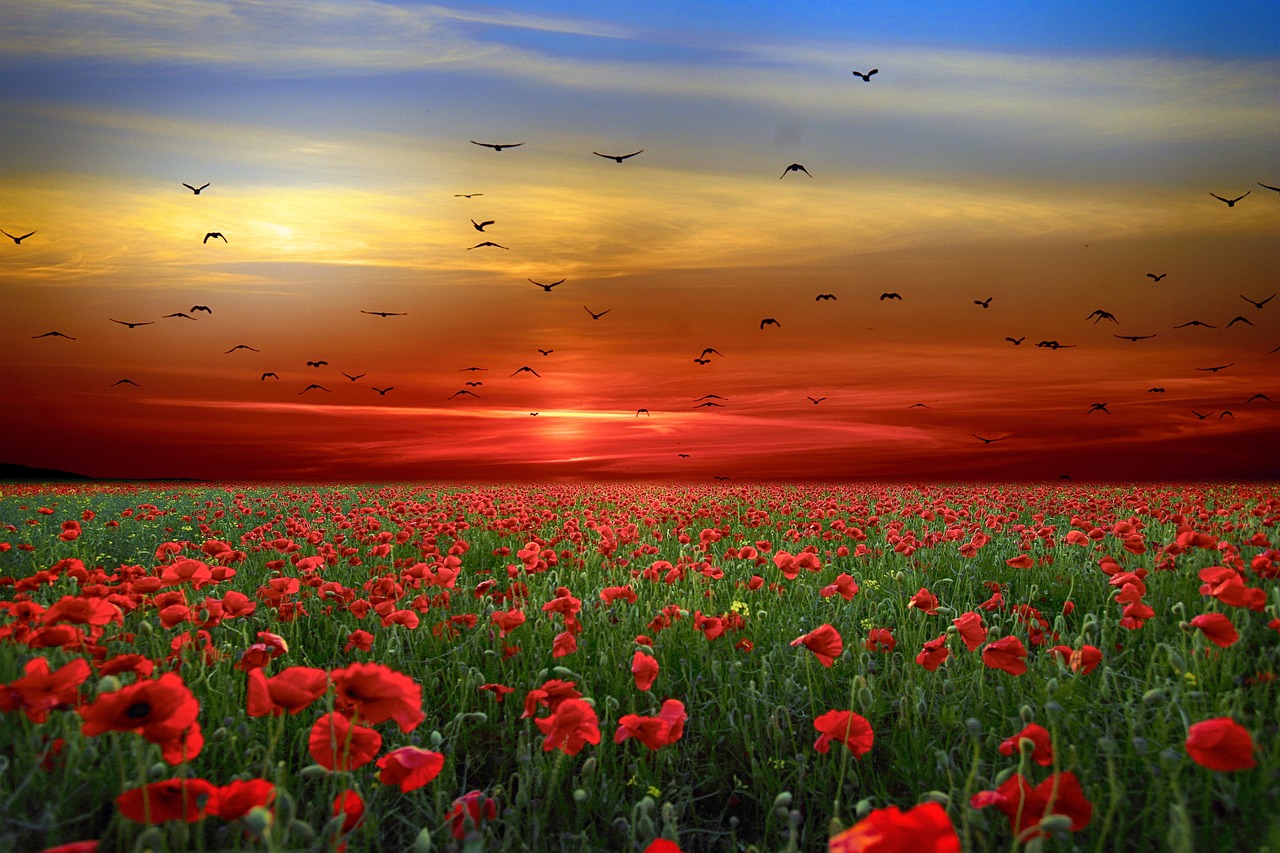
The humble poppy, is a herbaceous flowering plant that grows in open meadows across the world. With around 250 species, they are mostly found in the northern hemisphere. Poppies come in a rainbow of colours but perhaps the most recognisable is the Flanders Poppy (Papaver rhoeas), known for its bright red flowers. It’s an annual, meaning that it grows from seed to flower and produces seeds in a single year’s growing season. Its blooms make their appearance from late spring to early summer, bringing the meadows to life with its bright petals. These are the poppies that covered the fields in Flanders Belgium, the poppies that sprung up across the battlefields of the First World War. These are the poppies that inspired Lieutenant-Colonel John McCrae, a medical officer from Guelph, Ontario in the Canadian Field Artillery, to write the famous poem:
In Flanders Fields
John McCrae
In Flanders fields the poppies blow
Between the crosses, row on row
That mark our place; and in the sky
The larks, still bravely singing, fly
Scarce heard amid the guns below.
We are the Dead. Short days ago
We lived, felt dawn, saw sunset glow,
Loved and were loved, and now we lie
In Flanders fields.
Take up our quarrel with the foe:
To you from failing hands we throw
The torch; be yours to hold it high.
If ye break faith with us who die
We shall not sleep, though poppies grow
In Flanders fields.
The western front in the First World War was littered with poppies, so it’s no wonder the Canadian doctor and poet was inspired to write about them. Many soldiers sent home poppy flowers pressed inside their letters home. The poppies were a burst of colour in a bleak landscape and a boost for morale for soldiers fighting in difficult conditions.
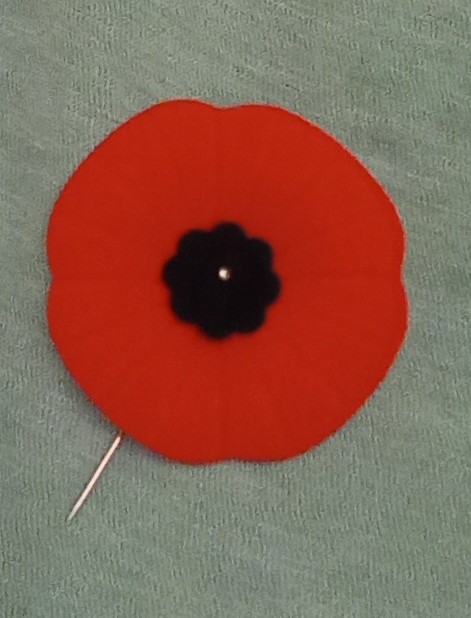
But how did the poppy make the leap to a symbol of remembrance? Thanks to two tenacious ladies: American Moina Michael, a professor at the University of Georgia who was inspired by McCrae’s poem to “keep that faith” and Frenchwoman Anna Guérin. Both women championed the idea of making and selling artificial poppies that people could wear. Today millions of poppies are worn in Canada, the United Kingdom, and other Commonwealth Countries for Remembrance Day on November 11.
Let the poppy be not just a symbol of remembrance and faith, but a symbol of hope, like it was for the soldiers on the western front when a young Canadian doctor from Guelph penned those now famous lines.