Here we are in December, in the midst of the holiday season. Today is the Winter Solstice in the northern hemisphere, the shortest day and longest night. Holiday decorations abound and almost everywhere you go Christmas music is playing. Pretty coloured lights bring cheer to the long dark nights. In our house, we long ago switched to LED lights to use very little energy compared to the old incandescent light strings. Less energy means less extra money spent on electricity and they’re better for the planet too! It’s a win-win!

But how can we brighten up the often grey early winter days and bring some festive cheer that will attract wildlife? One way is to make popcorn garlands and string them in your trees, deck railings, or balcony. Kids love to make them too! Just be aware that popcorn is full of empty calories and should not be the only food that you put out. Adding dried fruit, like cranberries, provides a healthier snack for birds as well as some colour to your garlands. You can also make suet balls and hang them from ribbon. If you have conifers nearby, it’s easy enough to collect their cones and make them into festive natural feeders.
Make Natural Pine Cone Feeders
Cones are where the seeds of pine trees and other conifers grow and develop. Hence the term conifer, cone conifer, get it? Female cones are the equivalent of female flower parts and are fertilised by pollen from the male cones in the springtime. The fertilised embryos develop into seeds which are held in the cones and will grow into baby trees if they don’t get eaten by nearby wildlife. Cones can be found under coniferous trees like pines in the forest, in parks, and in backyards. We have several eastern white pine trees (pinus strobus) in the forest surrounding our house so we were quickly able to collect a large number of cones from the ground underneath them.
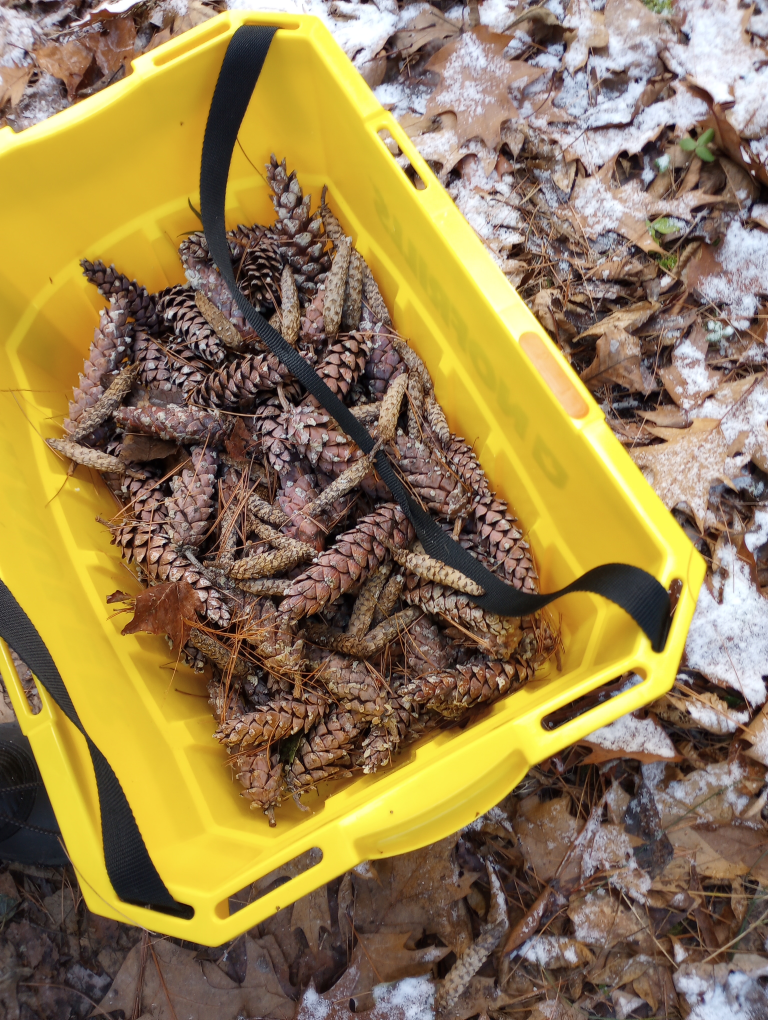
IMPORTANT: If the temperature is above freezing and you live in an area where deer ticks are prevalent like we do, be sure to do a tick check when you come back inside. You don’t want to take a chance on getting Lyme disease from a tick bite.
You’ll probably have fingers covered in sticky pine sap when you come in. The easiest way to get rid of it is to rub vegetable all over your hands. Sap is lipid or fat soluble, so you need a lipid to remove it. Then use a good soap to remove the oil. We use dish detergent. You may find your fingers are still a bit sticky. Just rinse and repeat.
We left the pine cones to dry out for a few days before making our feeders, but you can make them right away if you prefer.
It’s time to make the feeders, so gather your materials. You’ll need:
- Cones
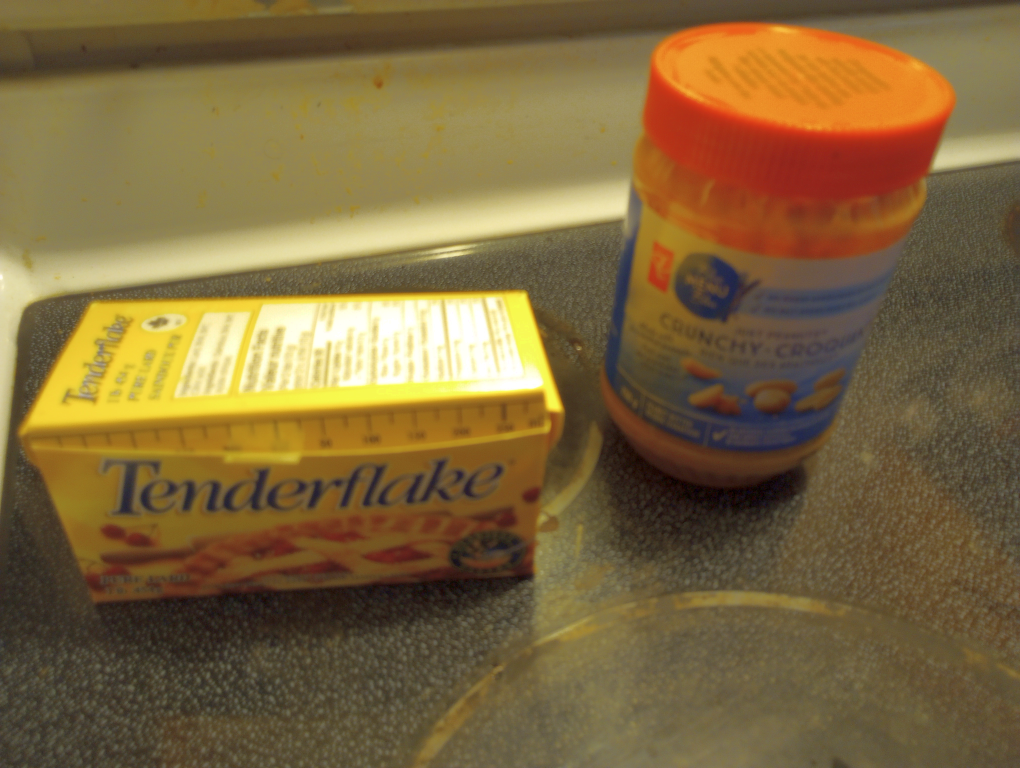
- Peanut butter (we used natural crunchy PB)
- Suet
- Bird seed mix
- String or ribbon
If you can’t find suet, lard is the best alternative. Bacon fat has too much salt and shortening is unhealthy for birds for the same reason it’s unhealthy for humans.
When choosing which cones to use, you’ll want cones that have opened up a bit so there’s more space for the bird seed.
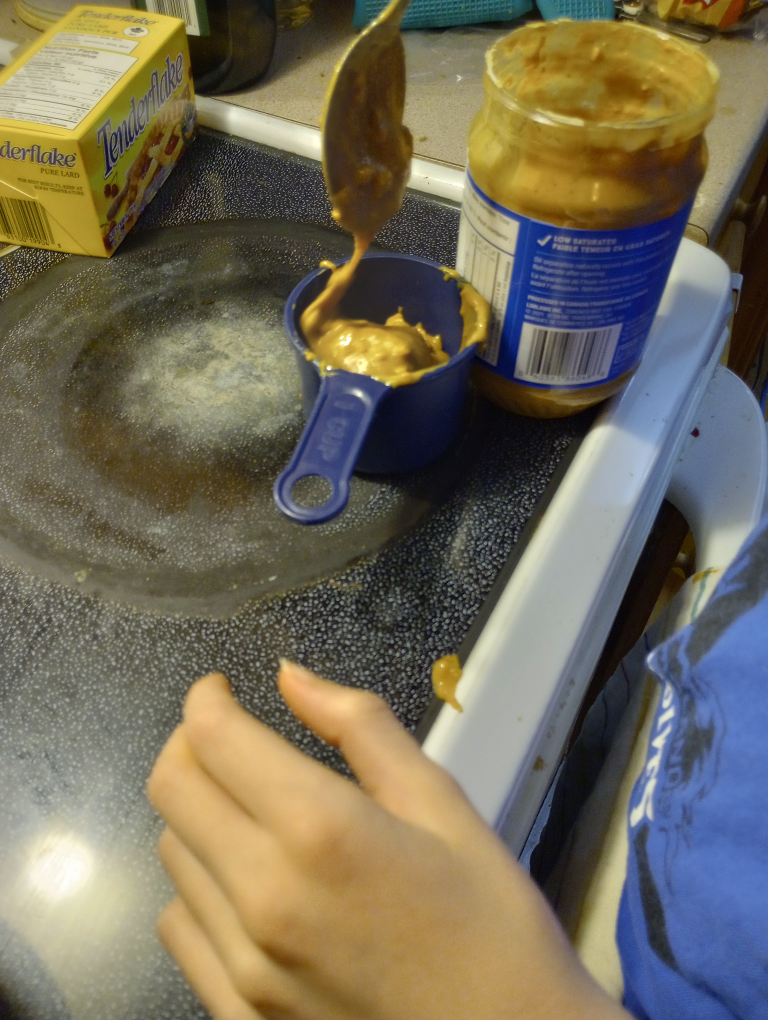
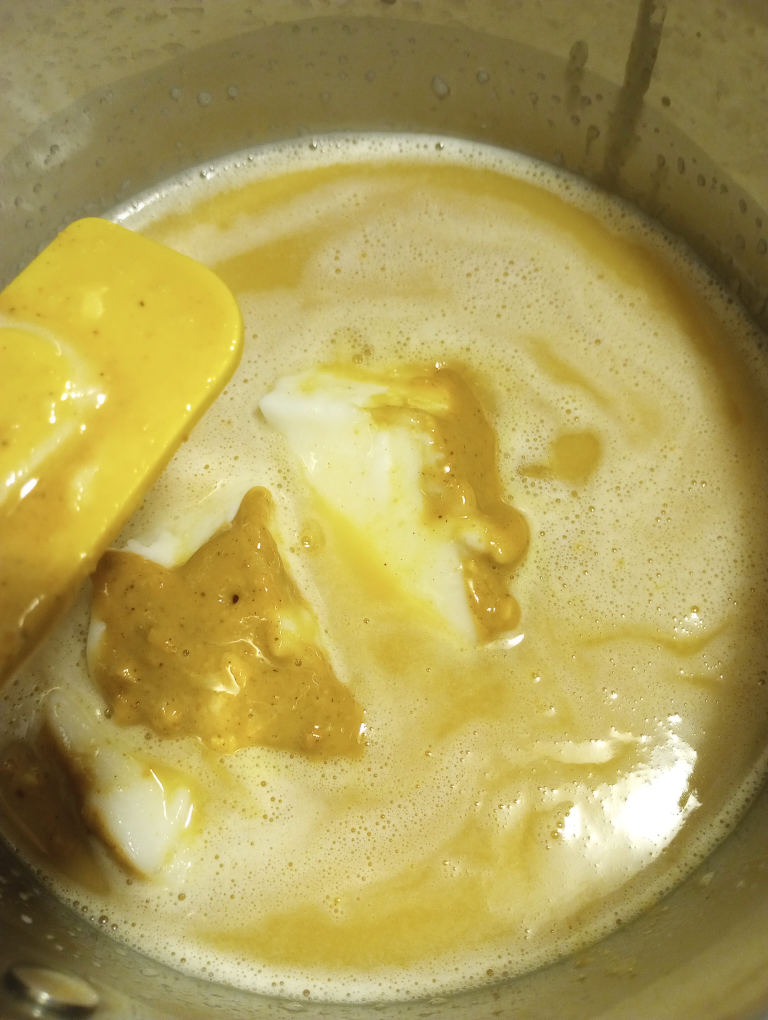
Melt 1 cup (250mL) of peanut butter and 1 cup (250 mL) of suet or lard in a medium saucepan over low heat. Stir occasionally with a wooden spoon.
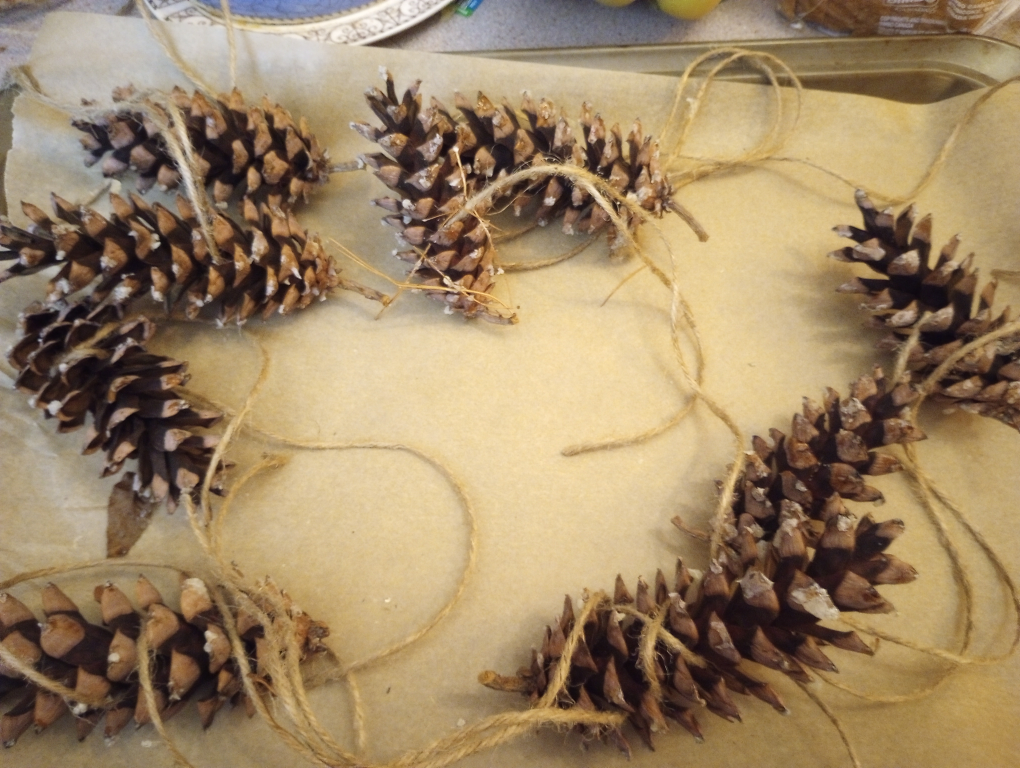
Meanwhile you will need to cut string or ribbon into 30-60 cm lengths, depending on how big your cones are. We used jute string, so that it will biodegrade, and tied it around the pine cones from the middle of the string. We then placed the cones on a baking sheet lined with baking parchment. Waxed paper would work too.
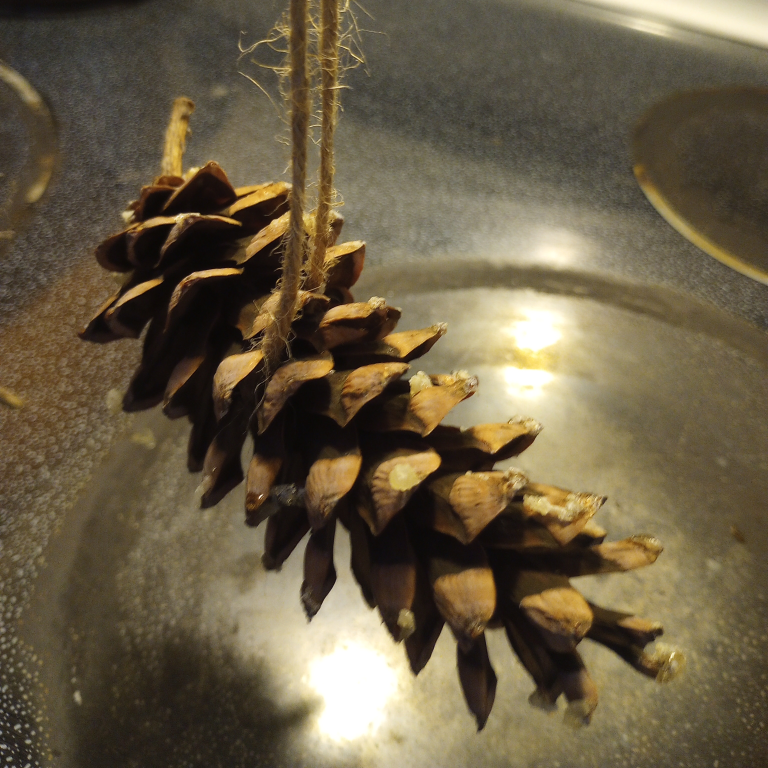
The kiddo poured birdseed into a tray that was wide enough for a pine cone. A wide bowl is a good alternative.
Holding a pine cone by the string we drenched it with the peanut butter lard mixture.
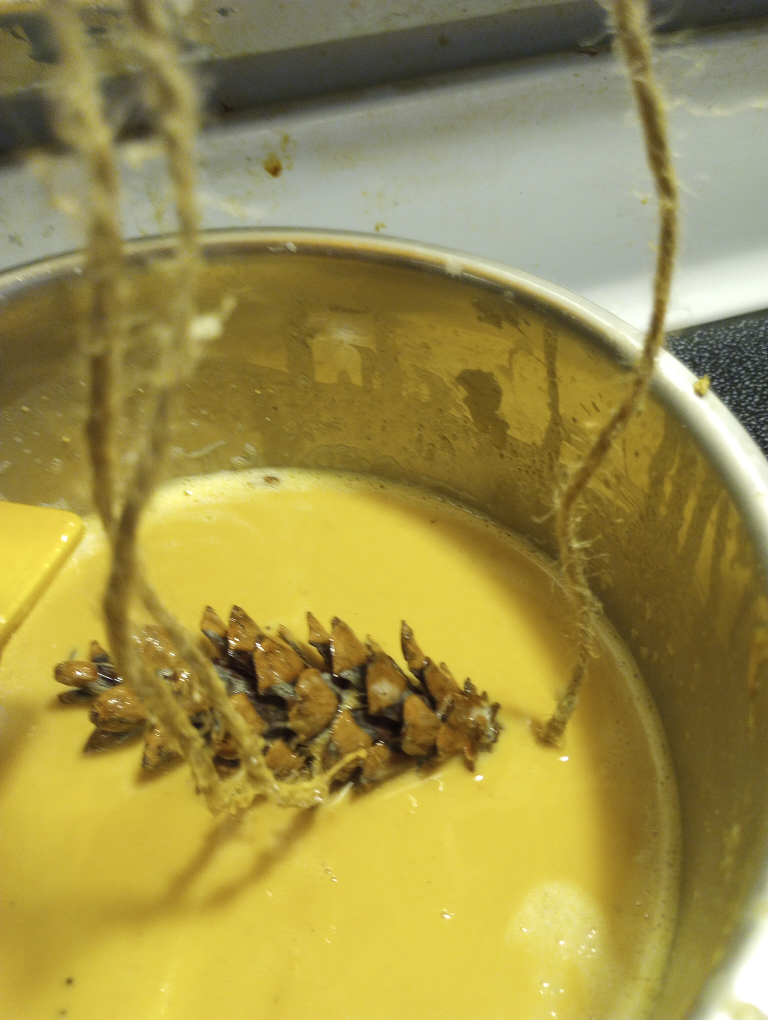
The next step was to cover it with birdseed, pushing seeds into the gaps of the pine cone. Watch out for the hot fat and be prepared to get a bit greasy as the fat mixes with the seeds.
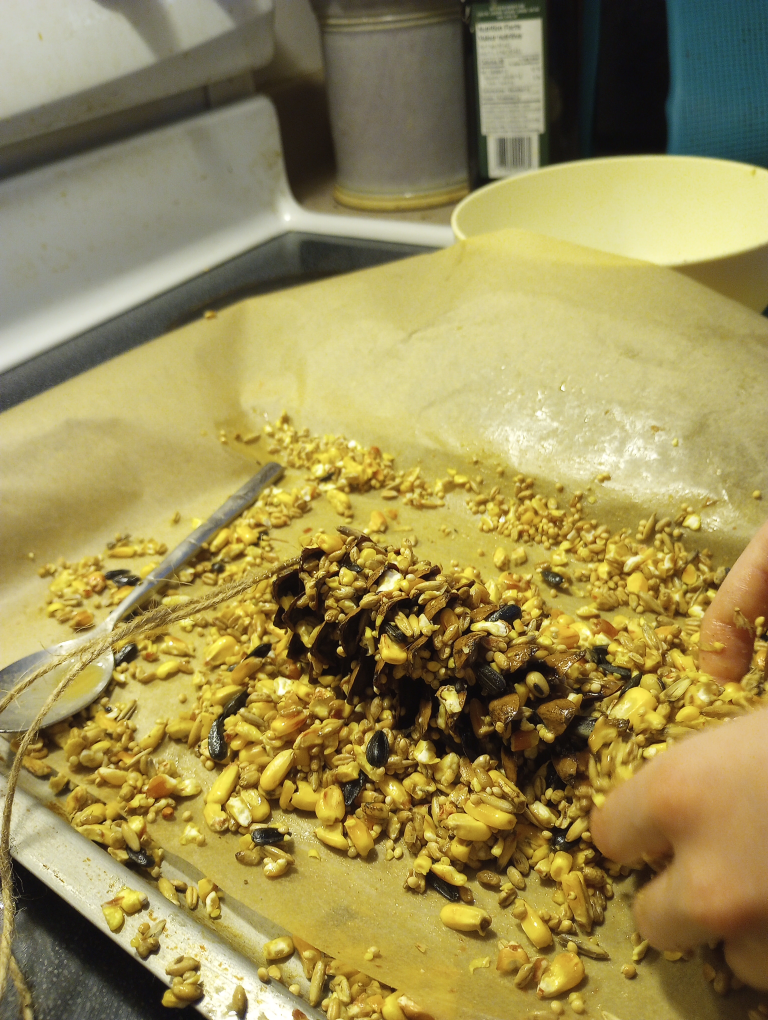
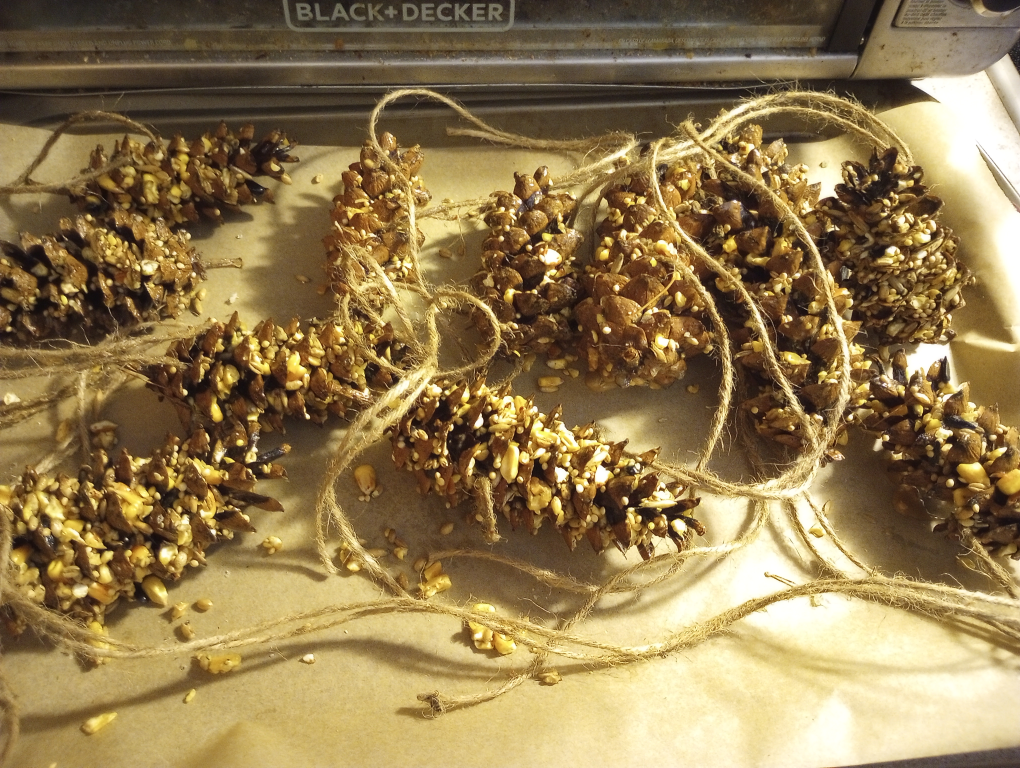
We returned the covered cones to the tray and placed it in the fridge for the fat to set.
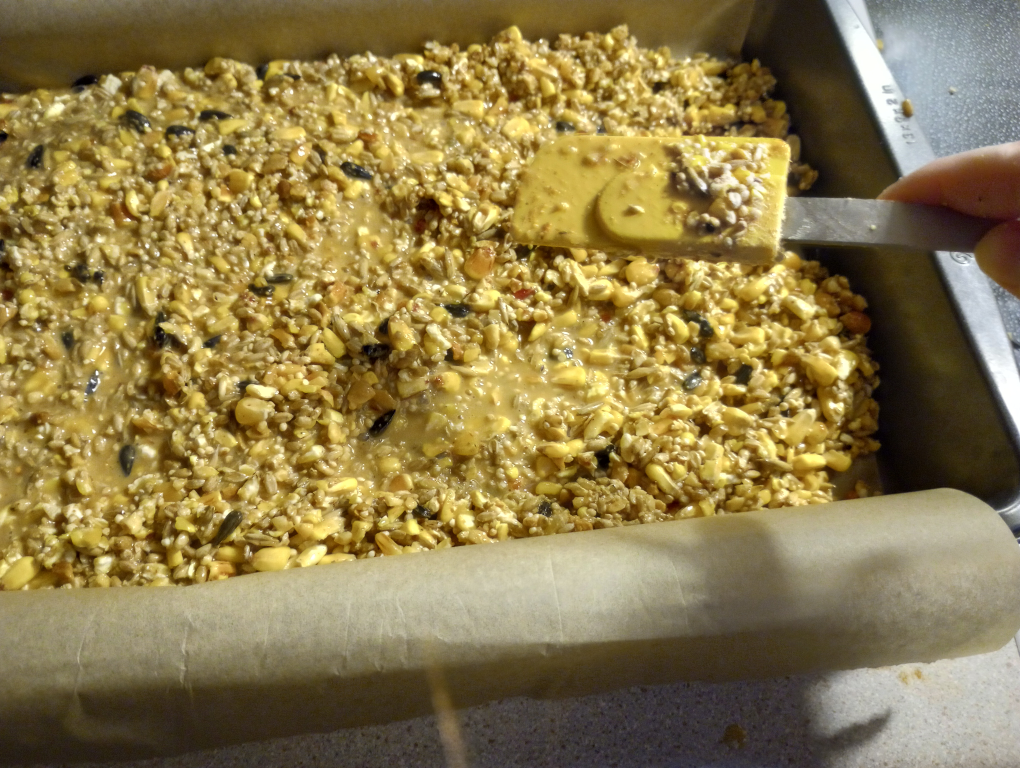
After covering as many cones as we wanted we mixed birdseed into the remaining fat mixture. We then spread it in a baking parchment lined baking pan and put it in the freezer to set. It can later be cut into squares to be put into a suet feeder at any time. You can also tie them with ribbon and hang them out for the birds as another festive outdoor feeder.
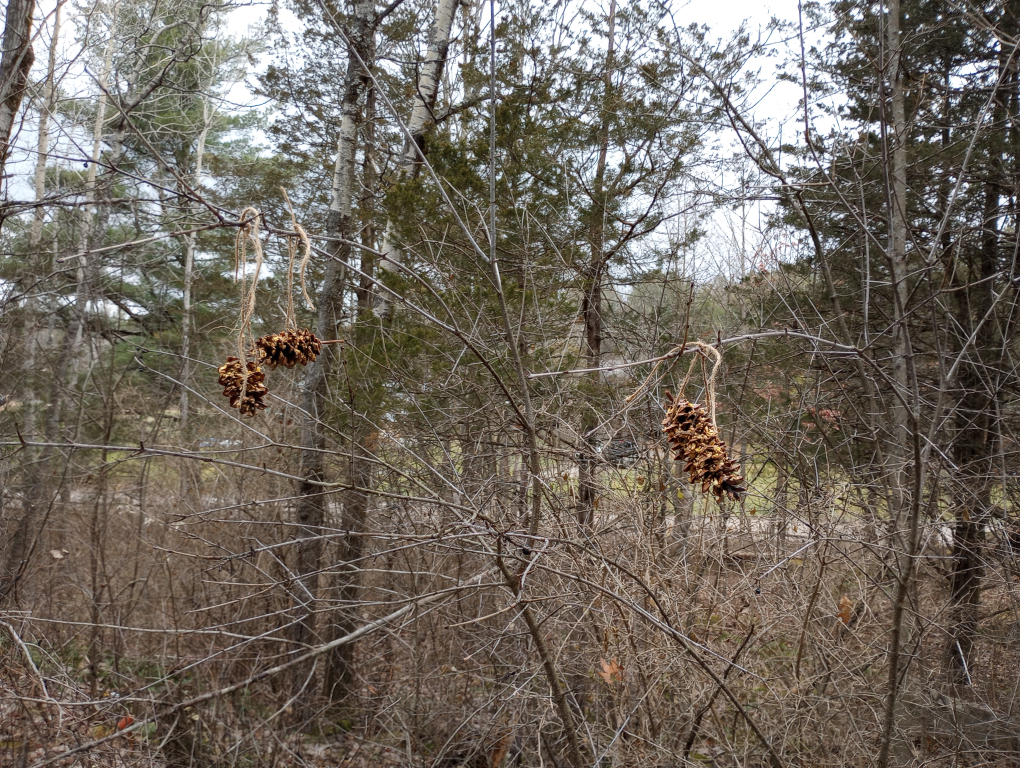
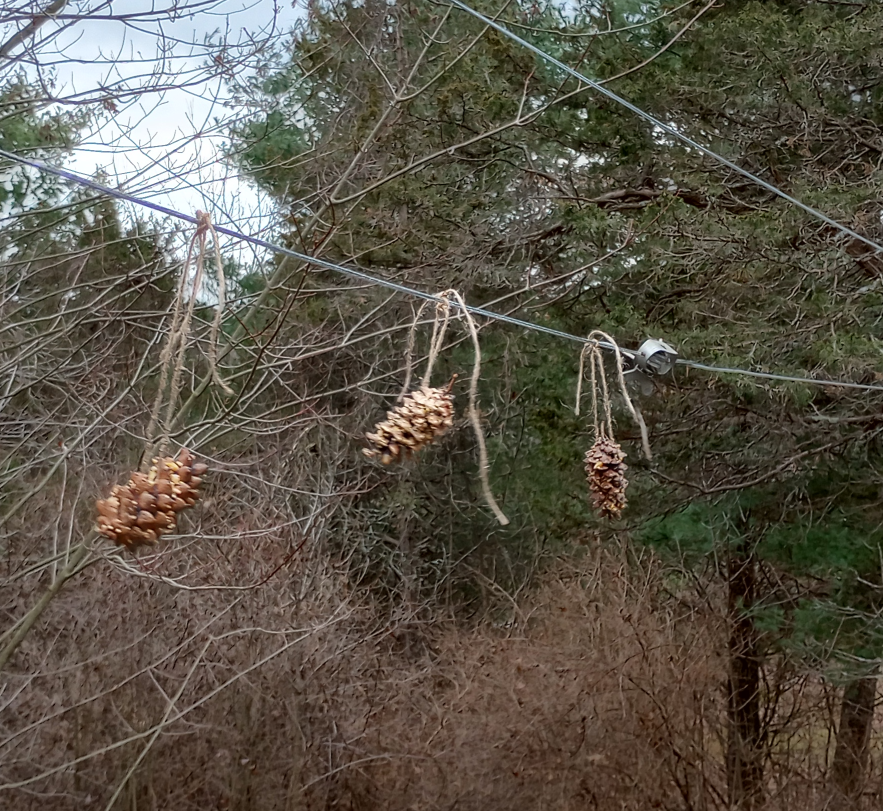
All that’s left to do is hang your feeder. We tied them to tree branches and our clothesline in places where we can see them from our windows. Now sit back and enjoy our feathered friends and practice identifying which species come to visit. We use allaboutbirds.org and the Merlin Bird ID app to help. We have seen chickadees, juncos, and a hairy woodpecker. We even saw a little red squirrel one morning.