Today, April 22nd, is Earth Day. From its beginnings in 1970, Earth Day has spread across the world. In Canada, the first Earth Day, held on 11 September 1980, was organised by a graduate student from Queens University in Engineering Physics/Solar Engineering, Paul D. Tinari. There were workshops with environmental professionals, litter pickups, and tree plantings.
What Can You Do?
1. Go forest bathing

In a nutshell, it’s a way to relax by going out among the trees and calming yourself. You focus on breathing deeply and observing the nature that surrounds you. Forest bathing began in Japan where it’s known as shinrin yoku. You can find out more about forest bathing and tips for beginners at Forestry England.
2. Plant a native tree
Native trees provide habitat for native species, they have evolved to thrive in local conditions. Trees also provide shade is in the heat of summer and wind protection in the winter. Their roots stabilise the soil and help it to absorb carbon dioxide (CO2) as well as using a significant amount of CO2 themselves.
3. Plant an organic garden
Growing your some of own food means that you can reduce your reliance on industrial farming which fuels the big grocery store chains. You also control what goes into your food and focus on sustainable and restorative methods that involve using compost which not only adds nutrients but increases the organic layer contributing to humus. This increases the population of microbes that contribute to healthy soils and improves the soil’s ability to capture carbon to fight climate change.
4. Support pollinators – plant flowers that attract pollinating insects and birds
Our vast array of pollinating insects and birds is dwindling. We’ve all heard about the disappearing bees. Without bees, we won’t have any honey! By growing plants that attract bees, butterflies, hummingbirds, and other pollinators, not only do we help them by providing habitat and food but we make our small part of the world more colourful and welcoming. Plus, some of these plants can provide us with food from their fruits! We can grow an organic fruit and vegetable garden and grow flowers for pollinators at the same time! Did you know that many of our food plants rely on pollinators? Tomato, cucumber, and pumpkin are just a few that need pollinators in order to produce the fruit that we enjoy.
5. Speak up – write letters/emails, sign petitions, etc for politicians to enact eco-friendly policies and legislation
Even though politicians often meet with lobbyists for the big companies that seem to run our world, it’s not companies that vote for them. By telling your politicians your story and asking them to support or vote against certain policies, bills, ideas, you are telling them how they can get your vote in the next election. If they hear from enough constituents on issues to make them nervous, they will think the next time your issue comes up in the house.
6. Support local food producers
It’s difficult for small producers to get into the big grocery stores. Help to grow your local food economy and buy your food from small local producers.
7. Get outside and explore; take a field guide or two so you can identify what you find
By getting out into nature, breathing in the fresh air, and learning about the species around you, you become closer to nature, reduce stress and anxiety, and are more inclined to take action to protect it.

8. Use a reusable water bottle or coffee mug.
Every time you opt for a reusable cup or bottle that’s less plastic that ends up in the landfill, our waterways, and the ocean.
9. Compost more
If your community has composting as part of its waste management make sure that you put everything that you can in your green bin. If it doesn’t compost what you can in a backyard composter and start or join a campaign for your municipality to start a green bin programme.
10. Donate time and money to an environmental group
Environmental groups, non-government organisations (NGOs), of all sizes may be registered charities, but all have limited funds and rely on donations and volunteers to do their important work.
11. Go meat-free at least one day a week
Unless your meat is sustainably produced and pasture-raised, it produces greenhouse gases.
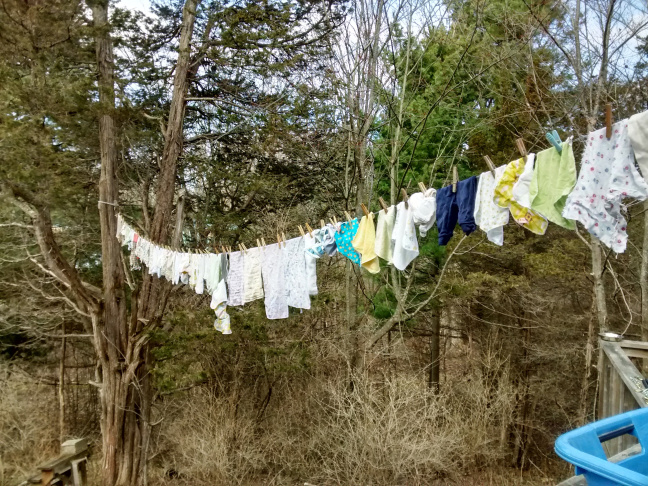
12. Dry your clothes outside
Not only does this save you money and save energy, plus your laundry will come inside smaller of fresh air. Don’t have a way to dry them outside? Line-dry them inside instead.
13. Use refillable pods/filters in your coffee maker
In many cases, the disposable ones are not recyclable. By using reusable pods, you can buy your coffee in larger quantities, use whichever sustainably produced coffee you would like
14. Watch an environmental documentary, like Kiss the Ground, and act on what you learn.
Check out Kiss the Ground for more information and watch the film on Netflix.
15. Choose eco-friendly products when you shop
Whether it’s using eco-friendly cleaning products, like TruEarth or simple vinegar, or buying sustainably and ethically produced coffee or chocolate or clothing, or going to a thrift store to get previously used clothing or dishes, you can make a difference. If more of us voted with our money, big corporations would notice it in their bottom line and would pay attention.
16. Use public transit as much as you can

I recognise that this it not available to everyone. I live in the country where there is no public transit, but when I have to travel for work, instead of getting a taxi to my hotel I hop on the subway or the commuter train instead. Not only does it save me money, it reduces my personal greenhouse gas emissions, and I get some exercise when I walk from my stop to my hotel.
17. Start a seed jar
This is a great way to start plants for your garden. It also allows you and your kids to see how seeds grow into plants, something that’s usually hidden under the soil.
18. Set up a rain barrel to collect water for your garden
Many people connect their rain barrels to the downspouts from their gutters or eavestroughs. By collecting rainwater that comes off your roof, you redirect some of the water that would have otherwise gone into the storm sewer. It also means that in times of lower rainfall, you have water for your garden, reducing your need to use water from the tap. This can significantly reduce your water bill or if you are in the country and have a well, it reduces the load on the aquifer that your well draws from, so that you will have water for drinking and washing within your home.
19. Find out about plastic in our oceans and what you can do about it; make a plan
So much plastic has made its way into our waterways and the ocean that many aquatic and marine species now have significant amounts of plastic in their bodies. Microplastics have even made their way into our own bodies. It’s no longer unusual to find marine mammals and fish tangled up in plastic which can leave them to starving and susceptible to predators. Check out Oceans Canada for more information.
20. Put up birdhouses, bat houses, and other wildlife habitat in your garden
With the loss of natural areas, many wildlife populations are dwindling. We can help by providing habitat in our gardens. Plus, did you know that bats eat mosquitoes? So putting up bat houses around your house will help to reduce your mosquito population, making it more comfortable to stay outside after dark!
For more ideas on how to get outside check out my 5 Easy Activities to Engage Kids in Nature.